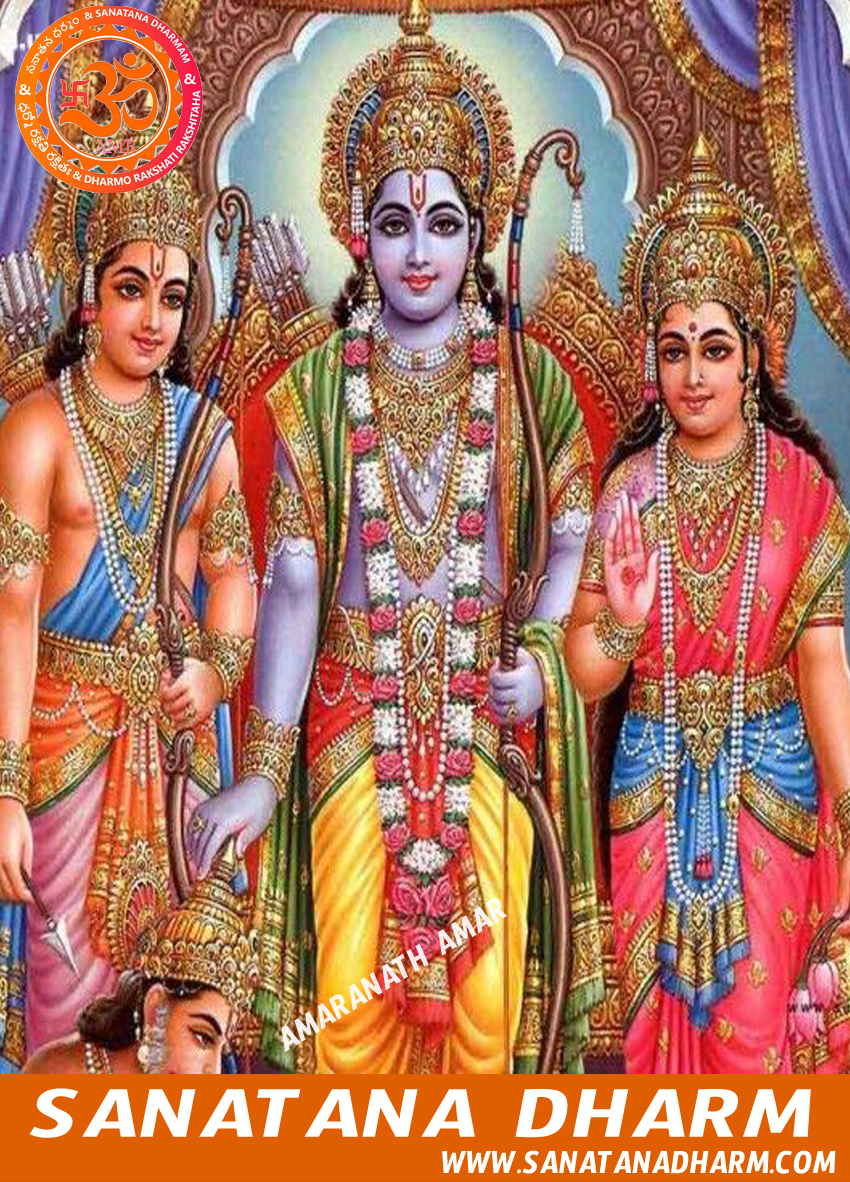
About the Ramayana :- The Ayodhya Kanda is the most emotionally powerful section of the Ramayana. As King Dasharatha prepares to crown Rama as heir, Queen Kaikeyi — influenced by her maid Manthara — invokes two ancient boons, demanding that Rama be exiled for 14 years and her own son Bharata be crowned instead. Rama accepts exile without a moment of hesitation, demonstrating perfect obedience and dharma. Sita and Lakshmana insist on accompanying him. The citizens of Ayodhya weep as the three depart for the forest. King Dasharatha dies of grief. When Bharata learns of these events, he rushes to the forest and begs Rama to return, but Rama refuses to break his father's word. Bharata takes Rama's sandals and places them on the throne, ruling as regent. This kanda teaches the supreme value of keeping one's word and the power of sacrifice.

Sanatana Dharm సనాతన ధర్మం  Sanatana Dharm సనాతన ధర్మం  Sanatana Dharm సనాతన ధర్మం
stroms English  Srimad Bhagavad Gita  Valmiki Ramayanam English

Valmiki Ramayanam - अयोध्याकाण्ड - Ayodhya Kanda


Ayodhya Kanda - Sarga 17 - 18v


Ayodhya Kanda – Sarga 18 · v1
स ददर्श आसने रामः निषण्णम् पितरम् शुभे |
कैकेयी सहितम् दीनम् मुखेन परिशुष्यता || २-१८-१

Rama saw his father sitting on a beautiful seat, but with his face looking completely parched up and miserable. Kaikeyi was at his side.

राम ने शुभ आसन पर बैठे हुए अपने पिता को देखा, जो कैकेयी के साथ थे और जिनका मुख सूख गया था। वे दीन दिख रहे थे।

Ayodhya Kanda – Sarga 18 · v2
स पितुः चरणौ पूर्वम् अभिवाद्य विनीतवत् |
ततः ववन्दे चरणौ कैकेय्याः सुसमाहितः || २-१८-२

Rama being humble and well composed, first reverentially saluted his father's feet and then saluted Kaikeyi's feet.

वह पुत्र पहले अपने पिता के चरणों में विनम्रतापूर्वक प्रणाम करके, फिर कैकेयी के चरणों में ध्यानपूर्वक वंदन किया।

Ayodhya Kanda – Sarga 18 · v3
राम इति उक्त्वा च वचनम् वाष्प पर्याकुल ईक्षणः |
शशाक न्ऱ्पतिर् दीनो न ईक्षितुम् न अभिभाषितुम् || २-१८-३

Dasaratha spoke only one word "Rama!" with his eyes filled with tears and dejected, being not able to see or to talk any further words.

राजा राम का नाम लेकर, अश्रुपूर्ण नेत्रों से, दीन होकर, न तो देख सका और न ही बोल सका।

Ayodhya Kanda – Sarga 18 · v4
तत् अपूर्वम् नर पतेर् द्ऱ्ष्ट्वा रूपम् भय आवहम् |
रामः अपि भयम् आपन्नः पदा स्प्ऱ्ष्ट्वा इव पन्नगम् || २-१८-४

Having not seen earlier such a fearful form of his father, even Rama was frightened as though he seized a snake by his foot.

उस राजा के भयानक रूप को देखकर, राम भी ऐसे भयभीत हो गए मानो उन्होंने किसी सर्प को छू लिया हो।

Ayodhya Kanda – Sarga 18 · v5
इन्द्रियैः अप्रह्ऱ्ष्टैअः तम् शोक सम्ताप कर्शितम् |
निह्श्वसन्तम् महा राजम् व्यथित आकुल चेतसम् || २-१८-५
ऊर्मि मालिनम् अक्षोभ्यम् क्षुभ्यन्तम् इव सागरम् |
उपप्लुतम् इव आदित्यम् उक्त अन्ऱ्तम् ऱ्षिम् यथा || २-१८-६

That king Dasaratha was sighing heavily with senses sans pleasure, emaciated with grief and anguish, with distressed and agitated mind, like ocean which cannot be perturbed, becoming perturbed with row of waves, like sun which is eclipsed and who lost lustre like by a sage who spoke untruth.

यहाँ संस्कृत श्लोक का सरल हिंदी अनुवाद दिया गया है: इंद्रियों से रहित, शोक और संताप से दुर्बल, गहरी साँस लेते हुए, व्यथित और व्याकुल मन वाले राजा को देखकर ऐसा लगा जैसे लहरों से युक्त, फिर भी शांत रहने वाला सागर उथल-पुथल हो रहा हो, या जैसे कोई ऋषि झूठ बोले जाने पर दुखी हो।

Ayodhya Kanda – Sarga 18 · v6
अचिन्त्य कल्पम् हि पितुस् तम् शोकम् उपधारयन् |
बभूव सम्रब्धतरः समुद्रैव पर्वणि || २-१८-७

Contemplating over the unimaginable sorrow of the king, he was very much perturbed as an ocean does on a full moon day.

पिता के उस अकल्पनीय शोक को सहते हुए, वह (भरत) पर्व के समय समुद्र के समान अधिक व्याकुल हो गए।

Ayodhya Kanda – Sarga 18 · v7
चिन्तयाम् आस च तदा रामः पित्ऱ् हिते रतः |
किंस्विद् अद्य एव न्ऱ्पतिर् न माम् प्रत्यभिनन्दति || २-१८-८

The ingenious Rama, who is fond of his father's welfare, anxiously thought : " why indeed the king is not greeting me in return just today?"

तब पितृभक्त राम ने सोचा कि आज राजा मुझे क्यों नहीं पहचान रहे हैं।

Ayodhya Kanda – Sarga 18 · v8
अन्यदा माम् पिता द्ऱ्ष्ट्वा कुपितः अपि प्रसीदति |
तस्य माम् अद्य सम्प्रेक्ष्य किम् आयासः प्रवर्तते || २-१८-९

"At other times, the father, even though angry used to be gracious after seeing me why today such a father has become weary after seeing me?"

मेरे पिता मुझे पहले देखकर क्रोधित होने पर भी प्रसन्न हो जाते थे। आज मुझे देखकर उन्हें यह कष्ट क्यों हो रहा है?

Ayodhya Kanda – Sarga 18 · v9
स दीनैव शोक आर्तः विषण्ण वदन द्युतिः |
कैकेयीम् अभिवाद्य एव रामः वचनम् अब्रवीत् || २-१८-१०

Rama indeed distressed and afflicted with grief, with lustre faded from his face, offered his salutation to Kaikeyi and spoke these words.

कैकेयी को प्रणाम करके, दुखी और उदास मुख वाले राम ने ये वचन कहे।

Ayodhya Kanda – Sarga 18 · v10
कच्चिन् मया न अपराधम् अज्ञानात् येन मे पिता |
कुपितः तन् मम आचक्ष्व त्वम् चैव एनम् प्रसादय || २-१८-११

"I hope that I have not done anything wrong through ignorance. Tell me why father is angry with me. You alone propitiate him in my favour."

हे पिता, मैंने अज्ञानवश कोई ऐसा अपराध तो नहीं किया है जिससे आप क्रोधित हों? कृपया मुझे बताएं और मुझे उन्हें शांत करने का उपाय भी बताएं।

Ayodhya Kanda – Sarga 18 · v11
अप्रसन्नमनाः किम् नु सदा मां प्रति वत्सलः |
विवर्ण वदनो दीनो न हि माम् अभिभाषते || २-१८-१२

"Why my father, who was always affectionate to me, has become displeased? With his face becoming pale and dejected, he is not talking to me."

वह सदा मेरे प्रति स्नेह रखने वाला, अप्रसन्न मन वाला क्यों है? फीके मुख वाला, दीन होकर वह मुझसे बात नहीं करता।

Ayodhya Kanda – Sarga 18 · v12
शारीरः मानसो वा अपि कच्चित् एनम् न बाधते |
सम्तापो वा अभितापो वा दुर्लभम् हि सदा सुखम् || २-१८-१३

"I hope that either bodily affliction or mental distress is not troubling him. The object of happiness is indeed difficult to be attained always!"

शरीर से या मन से कोई कष्ट तो इसे नहीं हो रहा है? क्योंकि सुख तो सदा ही दुर्लभ है।

Ayodhya Kanda – Sarga 18 · v13
कच्चिन् न किंचित् भरते कुमारे प्रिय दर्शने |
शत्रुघ्ने वा महा सत्त्वे मात्ऱ्ऱ्णाम् वा मम अशुभम् || २-१८-१४

"I hope that no bad thing occurred to Bharata, the delightful man to look at or to Shatrughna, the man of great strength or to my mother. "

हे प्रियदर्शन कुमार, क्या भरत, शत्रुघ्न या मेरी माता को कोई अशुभ समाचार मिला है?

Ayodhya Kanda – Sarga 18 · v14
अतोषयन् महा राजम् अकुर्वन् वा पितुर् वचः |
मुहूर्तम् अपि न इच्चेयम् जीवितुम् कुपिते न्ऱ्पे || २-१८-१५

"If our father becomes angry, I do not desire to live even for a moment without satisfying him or without fulfilling his command."

महाराज को प्रसन्न न करके या पिता की आज्ञा का पालन न करके, मैं क्रोधित राजा के सामने एक पल भी जीवित नहीं रहना चाहूँगा।

Ayodhya Kanda – Sarga 18 · v15
यतः मूलम् नरः पश्येत् प्रादुर्भावम् इह आत्मनः |
कथम् तस्मिन् न वर्तेत प्रत्यक्षे सति दैवते || २-१८-१६

"Man sees father as the visible god who is the root cause of one's own coming into existence and how else can he behave towards him other than like that?"

जहाँ से मनुष्य अपनी उत्पत्ति देखता है, प्रत्यक्ष देवता के सामने वह कैसे न झुके।

Ayodhya Kanda – Sarga 18 · v16
कच्चित् ते परुषम् किंचित् अभिमानात् पिता मम |
उक्तः भवत्या कोपेन यत्र अस्य लुलितम् मनः || २-१८-१७

"I hope you have not spoken anything which hurt my father's conscience with your pride and anger."

क्या मैंने अभिमानवश या क्रोधवश आपके पिता से कुछ कठोर शब्द कहे थे, जिससे उनका मन व्यथित हुआ?

Ayodhya Kanda – Sarga 18 · v17
एतत् आचक्ष्व मे देवि तत्त्वेन परिप्ऱ्च्चतः |
किम् निमित्तम् अपूर्वो अयम् विकारः मनुज अधिपे || २-१८-१८

"I am asking you why my father got this perturbation, which was not there earlier. Tell me the true position."

हे देवी, मुझसे विस्तार से कहिए कि राजा को यह अभूतपूर्व विकार किस कारण से हुआ है।

Ayodhya Kanda – Sarga 18 · v18
एवमुक्ता तु कैकेयी राघवेण महात्मना |
उवाचेदं सुनिर्लज्जा धृष्टमात्महितं वचः || २-१८-१९

Thus questioned by the great souled Rama, Kaikeyi fearlessly spoke these words for her own benefit, without any shame on her part.

कैकेयी ने महात्मा रघुवंशियों के पुत्र राम के ऐसा कहने पर, निर्लज्ज होकर अपने हित की बात कही।

Ayodhya Kanda – Sarga 18 · v19
न राजा कुपितो राम व्यसनम् नास्य किंचन |
किंचिन्मनोगतं त्वस्य त्वद्भयान्नाभिभाषते || २-१८-२०

"Oh, Rama! The king is not angry. There is nothing of distress for him. But he has something in mind which he is not telling from fear."

हे राम, राजा क्रोधित नहीं हैं और न ही उन्हें कोई कष्ट है। वे अपने मन की बात तुमसे डर के कारण नहीं कह पा रहे हैं।

Ayodhya Kanda – Sarga 18 · v20
प्रियम् त्वामप्रियम् वक्तुम् वाणी नास्योपपर्तते |
तदवश्यम् त्वया कार्यम् यदनेनाश्रुतम् मम || २-१८-२१

"To him, words are not coming off to tell disagreeable utterance to you, the dear one. He promised me a word. It is to be certainly done by you."

प्रिय को अप्रिय कहना मेरी वाणी को स्वीकार नहीं है। इसलिए, तुम्हें अवश्य वही करना चाहिए जो मैंने इससे पहले नहीं सुना है।

Ayodhya Kanda – Sarga 18 · v21
एष मह्यम् वरम् दत्त्वा पुरा मामभिपूज्य च | स पश्चात्तप्यते राजा यथान्यः प्राकृतस्तथा || २-१८-२२

"Long ago, the king honoured me and gave me a boon. Like a common man, he is repenting now for having given the boon."

यह राजा मुझे वरदान देकर और पहले मेरा पूजन करके, बाद में किसी साधारण मनुष्य की तरह पश्चाताप करता है।

Ayodhya Kanda – Sarga 18 · v22
अतिसृज्य ददानीति वरम् मम विशाम्पतिः |
स निरर्थं गतजले सेतुम् बन्धितुमिच्छति || २-१८-२३

"This king promised me to give the boon and now he desires to build a dam wastefully on a place where water has gone away."

यह श्लोक कहता है कि राजा को अपनी प्रजा को सब कुछ दे देना चाहिए, यह सोचकर कि वह सब कुछ दे रहा है। लेकिन यह व्यर्थ है, क्योंकि वह बहते हुए पानी पर पुल बनाने की कोशिश कर रहा है।

Ayodhya Kanda – Sarga 18 · v23
धर्मूलमिदम् राम विदितम् च सतामपि |
तत्सत्यम् न त्यजेद्राजा कुपितस्त्वत्कृते यथा || २-१८-२४

"Oh, Rama! It is known by even wise men, that truth is the root of righteousness. See that the offended king does not abandon such a truth for your sake."

हे राम, यह सत्य है कि धर्म ही सब कुछ का मूल है, और सज्जन भी इसे जानते हैं। इसलिए, राजा को क्रोधित होकर भी सत्य का त्याग नहीं करना चाहिए, जैसा कि तुम्हारे लिए हुआ।

Ayodhya Kanda – Sarga 18 · v24
यदि तद्वक्ष्यते राजा शुभम् वा यदि वाऽशुभम् |
करिष्यसि ततः सर्वमाख्यामि पुनस्त्वहम् || २-१८-२५

"The king is about to mention that truth which may look auspicious or inauspicious to you. Still, I shall tell you all that, if you shall do it afterwards."

यदि राजा शुभ या अशुभ कुछ भी कहेगा, तो मैं वह सब कुछ करूँगा जो वह कहेगा।

Ayodhya Kanda – Sarga 18 · v25
यदि त्वभिहितं राज्ञा त्वयि तन्न विपत्स्यते |
ततोऽहमभिधास्यामि न ह्येष त्वयि वक्ष्यति || २-१८-२६

"If what is spoken by the king does not create unfavourableness in you, I shall then tell you. This king will not indeed tell you."

यदि राजा ने तुम्हारे बारे में जो कहा है, वह तुम्हारे लिए व्यर्थ नहीं जाएगा, तो मैं भी कहूँगा, क्योंकि वह तुम्हारे बारे में नहीं कहेगा।

Ayodhya Kanda – Sarga 18 · v26
एतात्तु वचनं श्रुत्वा कैकेय्या समुदाहृतम् |
उवाच व्यथितो रामस्ताम् देवीम् नृपसन्निधौ || २-१८-२७

After hearing the words of Kaikeyi, Rama felt painful and spoke thus to her in the presence of the king.

कैकेयी के इन वचनों को सुनकर, राजा के सामने दुखी राम ने उस देवी से कहा।

Ayodhya Kanda – Sarga 18 · v27
अहो धिङ्नार्हसे देवि पक्तुं मामीदृशं वचः |
अहम् हि वचनात् राज्ञः पतेयम् अपि पावके || २-१८-२८
भक्षयेयम् विषम् तीक्ष्णम् मज्जेयम् अपि च अर्णवे |
नियुक्तः गुरुणा पित्रा न्ऱ्पेण च हितेन च || २-१८-२९

"Oh, queen! what a pity! Do not talk like that to me. If father tells me, I shall jump even in fire. If father, who is a king, who wishes my welfare and who is venerable, commands me, I shall eat fiery poison and shall sink into an ocean."

हे देवी, मुझे इस प्रकार कहने के योग्य मत समझो। मैं राजा की आज्ञा से आग में भी गिर सकता हूँ, विष खा सकता हूँ और समुद्र में भी डूब सकता हूँ, यदि गुरु, पिता और हितैषी राजा ने मुझे ऐसा करने का आदेश दिया हो।

Ayodhya Kanda – Sarga 18 · v28
तत् ब्रूहि वचनम् देवि राज्ञो यद् अभिकान्क्षितम् |
करिष्ये प्रतिजाने च रामः द्विर् न अभिभाषते || २-१८-३०

"Oh queen! Tell me the words of the king as desired by him. I even promise to do it. Rama does not speak two things."

हे देवी, राजा को जो अभीष्ट हो, वह वचन कहो। राम प्रतिज्ञा करता है कि वह उसे करेगा, क्योंकि राम दो बार नहीं बोलते।

Ayodhya Kanda – Sarga 18 · v29
तम् आर्जव समायुक्तम् अनार्या सत्य वादिनम् |
उवाच रामम् कैकेयी वचनम् भ्ऱ्श दारुणम् || २-१८-३१

That vulgar Kaikeyi uttered very cruel words to that Rama, who was committed to sincerity and speaking of truth.

कैकेयी ने राम से, जो सीधे और सत्यवादी थे, अत्यंत दारुण (कठोर) वचन कहे।


Ayodhya Kanda – Sarga 18 · v30
पुरा देव असुरे युद्धे पित्रा ते मम राघव |
रक्षितेन वरौ दत्तौ सशल्येन महा रणे || २-१८-३२

"Oh, Rama! During a battle and a great war between celestials and demons long ago, I protected your father who was pierced by darts. Then, he gave me two boons."

यहाँ संस्कृत श्लोक का सरल हिंदी अनुवाद दिया गया है: हे राघव, पूर्वकाल में देवताओं और असुरों के युद्ध में, तुम्हारे पिता ने मेरी रक्षा की थी। उस महान युद्ध में, घाव से पीड़ित होने पर भी, उन्होंने मुझे दो वरदान दिए थे।

Ayodhya Kanda – Sarga 18 · v31
तत्र मे याचितः राजा भरतस्य अभिषेचनम् |
गमनम् दण्डक अरण्ये तव च अद्य एव राघव || २-१८-३३

"Oh, Rama! According to those boons, I asked the king for coronation of Bharata and for your going to Dandaka forest today itself."

हे राघव, आज ही भरत का राज्याभिषेक हो और आप दण्डकारण्य को प्रस्थान करें, यही मेरी आपसे प्रार्थना है।

Ayodhya Kanda – Sarga 18 · v32
यदि सत्य प्रतिज्ञम् त्वम् पितरम् कर्तुम् इच्चसि |
आत्मानम् च नर रेष्ठ मम वाक्यम् इदम् श्ऱ्णु || २-१८-३४

"Oh, Rama! If you want to make yourself and your father faithful to a promise, listen to these words of mine.

हे श्रेष्ठ नर, यदि तुम अपने पिता को सत्य प्रतिज्ञा वाला बनाना चाहते हो और स्वयं को भी, तो मेरे इस वाक्य को सुनो।

Ayodhya Kanda – Sarga 18 · v33
स निदेशे पितुस् तिष्ठ यथा तेन प्रतिश्रुतम् |
त्वया अरण्यम् प्रवेष्टव्यम् नव वर्षाणि पन्च च || २-१८-३५

"Abide by your father's command. As per his assurance, you have to stay in the forest for fourteen years."

पिता की आज्ञा का पालन करो, जैसा उन्होंने वचन दिया था। तुम्हें पांच और नौ वर्ष, अर्थात चौदह वर्ष वन में रहना होगा।

Ayodhya Kanda – Sarga 18 · v34
भरतस्त्वभिषिच्येत यदेतदभिषेचन्म् |
त्वदर्थे विहितम् राज्ञा तेन सर्वेण राघव || २-१८-३६

"Bharata is to be enthroned with the use of complete collection of materials already arranged by the king for your sake."

भरत का राज्याभिषेक होना था, जो आपके लिए ही राजा दशरथ द्वारा किया गया था।

Ayodhya Kanda – Sarga 18 · v35
सप्त सप्त च वर्षाणि दण्डक अरण्यम् आश्रितः |
अभिषेकम् इमम् त्यक्त्वा जटा चीर धरः वस || २-१८-३७

"You have to leave this coronation function and dwell in the forest of Dandaka for fourteen years, wearing braided hair and covered with a hide."

यहाँ संस्कृत श्लोक का सरल हिंदी अनुवाद दिया गया है: भरत ने दंडक वन में सात-सात वर्ष तक निवास किया। उन्होंने राज्याभिषेक को त्यागकर जटा और वल्कल धारण किए।

Ayodhya Kanda – Sarga 18 · v36
भरतः कोसल पुरे प्रशास्तु वसुधाम् इमाम् |
नाना रत्न समाकीर्णम् सवाजि रथ कुन्जराम् || २-१८-३८

"Let Bharata rule this earth, by residing in Ayodhya filled with various types of precious thing together with horses, chariots and elephants."

भरत कोसलपुर से इस पृथ्वी पर शासन करेंगे, जो अनेक रत्नों, घोड़ों, रथों और हाथियों से परिपूर्ण है।

Ayodhya Kanda – Sarga 18 · v37
एतेन त्वां नरेन्द्रोयम् कारुण्येन समाप्लुतः |
शोकसंक्लिष्टवदनो न शक्नोति निरीक्षितुम् || २-१८-३९

"For this reason, king Dasaratha who is overwhelmed with sympathy towards you is not able to see you with his face, afflicted with grief."

यह नरेन्द्र (राजा) करुणा से भरकर तुम्हें देख नहीं पा रहा है, क्योंकि उसका मुख दुःख से व्याकुल है।

Ayodhya Kanda – Sarga 18 · v38
एतत्कुरु नरेन्ध्रस्य वचनं रघुनन्दन |
सत्यन महता राम तारयस्व नरेश्वरम् || २-१८-४०

"Oh, Rama! Do as per the words of the king and liberate him by giving your father an opportunity to maintain the truth."

हे रघुवंश के आनंद राम! राजा दशरथ की यह आज्ञा मानो। हे नरेश्वर! सत्य के बल से राजा को तारो।

Ayodhya Kanda – Sarga 18 · v39
इतीव तस्यां परुषम् वदन्त्याम् |
नचैव रामः प्रविवेश शोकम् |
प्रविव्यधे चापि महानुभावो |
राजा तु पुत्रव्यसनाभितप्तः || २-१८-४१

Though she was speaking such harsh words, Rama was not affected with sorrow. But the mighty Dasaratha became highly disturbed, having been afflicted by the calamity occurred to his son.

जब वह इस प्रकार कठोर वचन कह रही थी, तब श्री रामचन्द्रजी को कोई शोक नहीं हुआ। परन्तु महानुभाव राजा दशरथ अपने पुत्र के वियोग से अत्यंत दुखी थे।



ramayanam Questions and Answers

Valmiki Ramayanam


Valmiki Ramayanam

www.sanatanadharm.com - play store app (sanatana dharm)  

"Bharathiya Sanatana Dharmam" and Sanatana Dharm & Dharmo rakshati Rakshitha logo are our trademarks. Unauthorised use of "Sanatana Dharmam & Dharmo rakshati Rakshitha" and the logo is not allowed. Copyright © sanatanadharm.com All Rights Reserved . Made in India.